
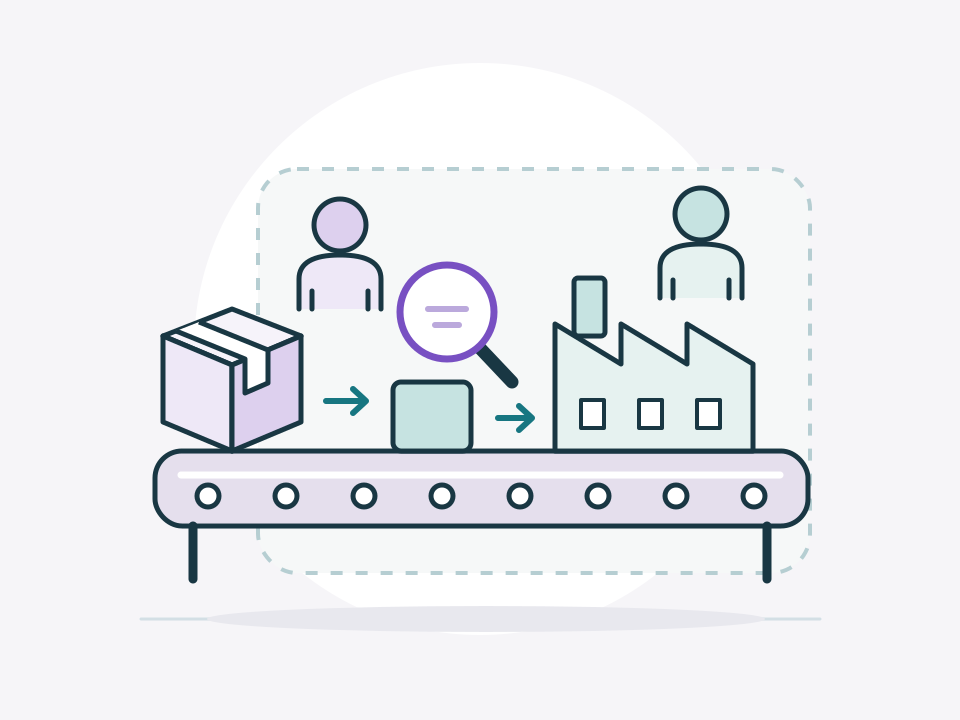
A purchasing team can find a lower price, a quality team can accept a material, and an operations team can reserve production time, yet the proposed supplier change can still be unworkable. The material may arrive after the reserved production slot. Each team has answered a reasonable local question. The larger decision depends on whether those answers fit together.
Systems engineering gives us a way to examine that fit. It brings the desired outcome, the parts of the system, and the relationships among those parts into a shared account of how the whole is supposed to work. At Hermod Labs, this is central to how we think about decisions whose consequences cross boundaries between people, activities, and organizations.
In the previous article, we described working backward from the desired outcome to identify requirements. Systems engineering connects that work to the design, integration, operation, and eventual change of the system that must satisfy them. Requirements and design develop together: a proposed solution can reveal a missing requirement, while a requirement can lead us to reconsider the solution.
The International Council on Systems Engineering, or INCOSE, describes systems engineering as an integrative approach that spans the realization, use, and retirement of engineered systems. Its definition includes systems composed of people, products, services, information, and processes. That breadth matters for our work. A purchasing decision can depend as much on responsibilities and procedures as on the properties of a material.
Set the system boundary around the purpose
We begin by deciding what the relevant system includes. For the supplier change, the scope might include procurement, incoming inspection, storage, production, and delivery to customers. The supplier’s own operations may remain outside our control while still creating dependencies the decision must account for. Drawing a boundary helps us identify both our responsibilities and the external conditions on which we rely.
The boundary should follow the purpose of the analysis. If we want to understand whether a material meets a particular specification, a narrow scope may be useful. If we want to understand whether changing suppliers reduces costs while preserving delivery commitments, we need to include the activities that could consume those savings or disrupt those commitments.
Within that scope, we need an account of how the work is organized. Who provides the material, who receives it, how acceptance is established, where it is stored, and how it reaches production are connected design choices. Together they describe an architecture for achieving the outcome. Alternative architectures may distribute responsibilities, resources, and dependencies differently.
Define what must pass between parts
The connections deserve as much attention as the components. NASA’s guidance on interface management treats defining interfaces and establishing compatibility as essential to integrating work performed by different parties. An interface describes what must fit or pass between parts of a system, including physical connections, information, and human interactions.
In our supplier example, a delivery interface might specify the material identity, quantity, packaging, arrival window, and documents needed for receipt. The interface between Quality and Operations might identify which material and process a finding covers and when that finding becomes available. These details determine whether the receiving activity can actually use what the preceding activity provides.
Shared words alone do not establish compatibility. A quality finding may concern one material revision while the purchase order specifies another. Two schedules may use different assumptions about when inspection is complete. Ontology engineering helps make the objects and relationships explicit, while interpretation helps us establish what the statements about them mean.
Assess timing, resources, and total consequences
Timing can make an otherwise workable combination fail. Suppose inspection takes two days and the delivery is scheduled one day before production. Material availability at the loading dock does not establish availability for use. Connecting those activities exposes the gap and gives people something concrete to revise: the arrival date, inspection arrangements, or production schedule.
Resources create similar dependencies. A trial and a customer order may each be feasible when considered separately, while both require the same line during the same hours. The conflict belongs to their combination. Looking at the complete arrangement makes visible a condition that neither isolated assessment was required to resolve.
NASA’s discussion of the fundamentals of systems engineering emphasizes how the relationships among parts contribute to the results of the whole. For our decisions, this means that properties such as delivery performance or total cost depend on interactions. They cannot always be established by adding up conclusions about individual components.
This also changes how we evaluate improvements. Purchasing larger lots may reduce the price per unit while increasing storage requirements, tying up funds, or creating more exposure to unused material. People need to assess the effect on the agreed outcome. Improving one department’s measure is useful when its consequences remain acceptable across the relevant system.
Integrate complete arrangements with their conditions
We therefore want to compare complete combinations of choices. Supplier, material, inspection approach, production slot, and authorization path may all affect one another. In our terminology, an arrangement is one complete candidate selection within the defined model. Assessment determines whether it satisfies the relevant requirements. Its completeness is relative to that scope; people still need to assess whether the model includes the conditions that matter.
Reasoning modules help organize those assessments. One module might examine material suitability, another resource availability, and another purchasing authority. Composing their results requires preserving the scope of each conclusion. A finding about a specific process can support a production proposal only where the proposal satisfies the conditions under which that finding applies.
Integration needs attention while those parts are being designed and assessed. If a module requires a dated authorization, the surrounding process must produce an authorization with the necessary identity, scope, and timing. Discovering that expectation early gives people a chance to establish the required exchange before the decision depends on it.
Verify requirements and validate intended use
We also need evidence about the assembled result. NASA distinguishes product verification and validation: verification addresses conformance to specified requirements, while validation addresses whether the system meets stakeholder expectations in its intended environment. Both are important when connecting a model of a decision to the work it represents.
For the supplier change, a material test may establish conformance to a stated specification. An operational trial can help examine whether receiving, inspection, storage, and production work together under relevant conditions. Its design should address the intended use, and its conclusions should retain any limits on what was observed.
The decision model itself also needs examination. A consistent set of dates and resource assignments can show that a plan satisfies the represented constraints. Observations from actual operations help us assess whether those constraints and assumptions adequately describe the situation. Both kinds of evidence contribute to understanding what the proposed arrangement can support.
Follow the arrangement through operation and change
The system continues beyond the initial decision. A supplier transition may require training, temporary inventory, revised procedures, and a way to handle the previous material. Later changes in demand, staffing, or supplier performance can alter what remains feasible. Considering the life of the arrangement helps reveal work that an initial approval can leave unfinished.
Feedback connects operation to revision. If inspection repeatedly takes longer than expected, that experience should inform future schedules and capacity assessments. If a material performs differently under changed operating conditions, the associated findings need review. Maintaining the relationship between evidence and conclusions allows experience to improve the next decision.
Explicit structure makes useful automation possible. With defined identities, interfaces, and compatibility rules, software can check combinations, identify competing commitments, and trace which conclusions depend on a changed assumption. People can then examine the relevant conflict or gap with a clear account of why it matters.
The shared structure also supports collaboration across specialties. A quality reviewer can contribute a bounded finding without needing to reconstruct the entire purchasing decision. An operations planner can see which conditions that finding imposes on production. Each person can work at a manageable level while keeping the consequences of their contribution visible to others.
Systems engineering helps us bring the parts back together around the purpose that justified them. We work backward from the desired outcome, develop and examine possible arrangements, and use evidence to assess how those arrangements behave as a whole. Our goal is to help people understand the system they are shaping and the consequences of the decisions they make within it.