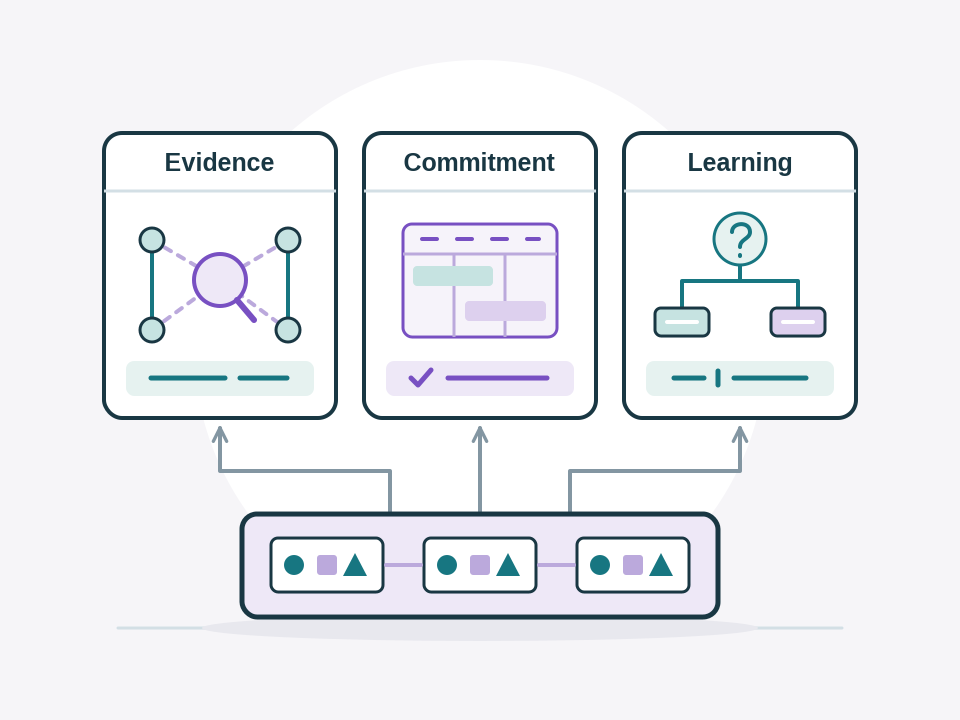
From Arrangements to Assessments
Complete combinations give us possibilities. Assessment patterns define what those possibilities mean and which conclusions their evaluation can support.

Articles / Assessment Patterns
Choose an assessment for evidence, operating commitments or the value of an investigation. Learn to read the resulting findings.
| Your question | What varies | Assessment pattern |
|---|---|---|
| What do these records establish? | Possible interpretations of the supplied evidence. | Evidence Assessment |
| Which complete option can meet our obligations? | Selectable operating arrangements. | Commitment Assessment |
| Should we investigate before acting? | An investigation and responses to its possible reports. | Information-Value Assessment |
Begin with the relationship between complete possibilities and the judgments they support.
Complete combinations give us possibilities. Assessment patterns define what those possibilities mean and which conclusions their evaluation can support.
Each article develops one assessment and the limits of its findings.
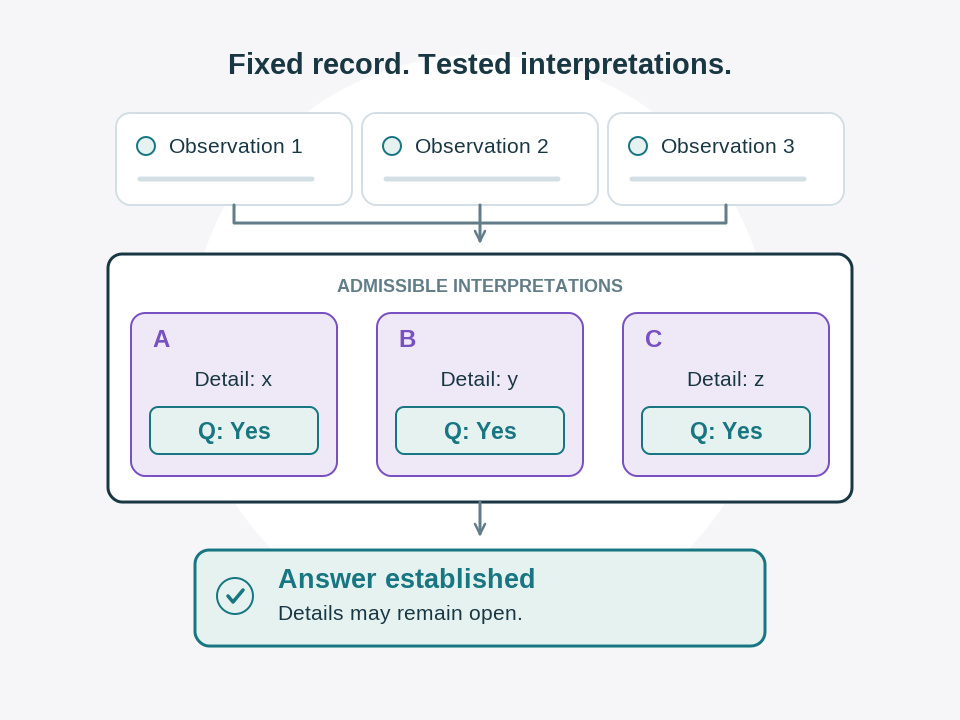
A plausible explanation is a beginning. Establishing an answer means examining whether the other admissible explanations could change it.
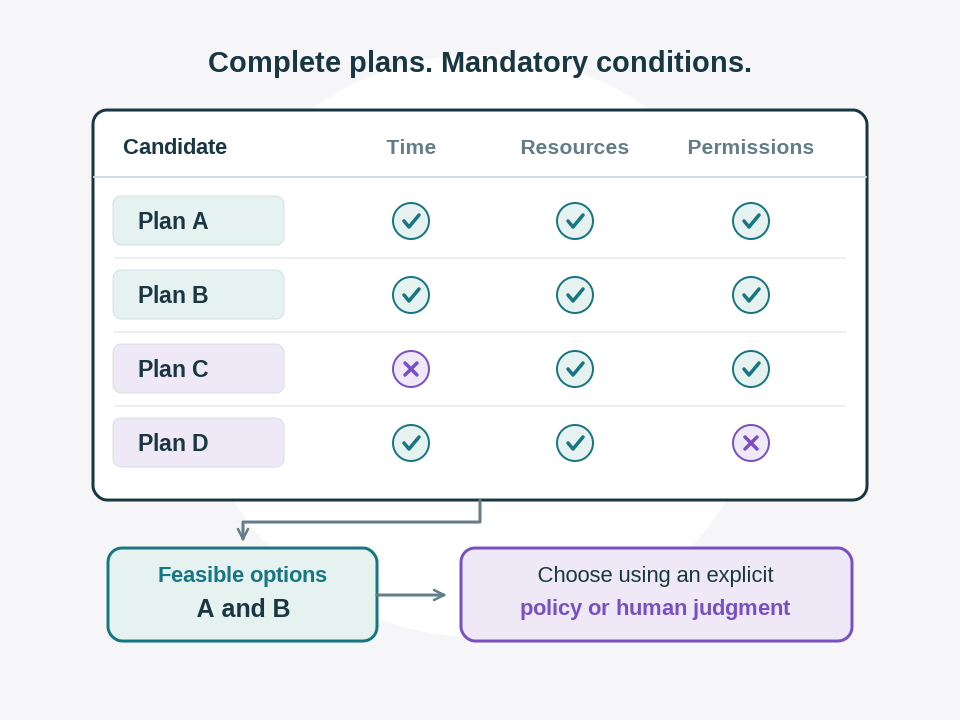
Check complete operating arrangements before choosing among them. Keep a workable option, an established preference and actual delivery separate.
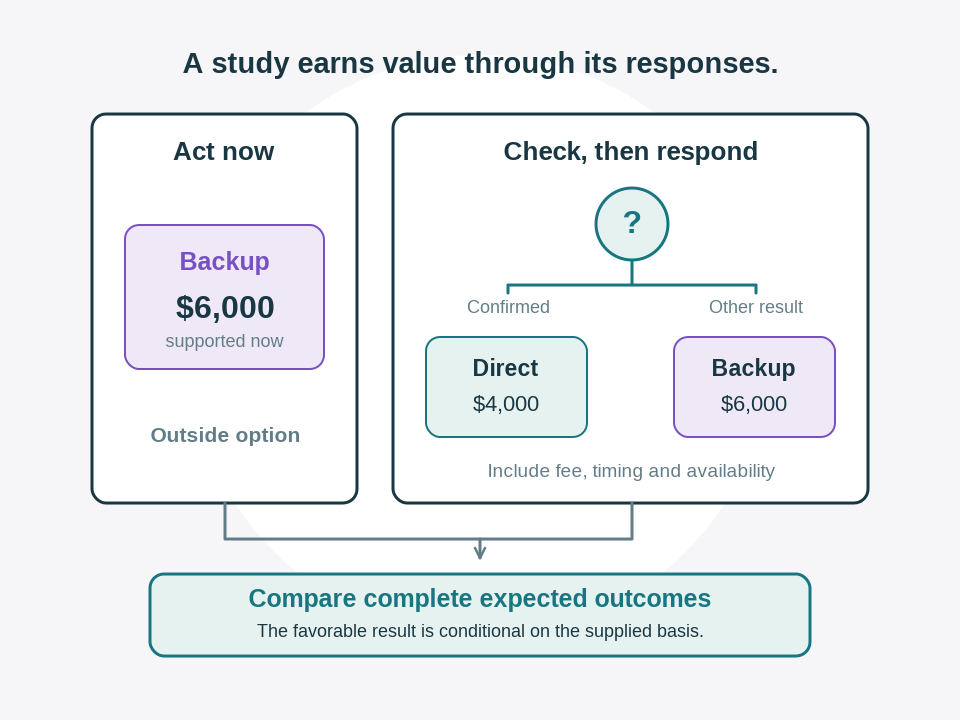
Information earns its value through the decisions it can improve. Compare an investigation and its possible responses with the best supported action available now.
Two practical companions on interpreting a finding and comparing feasible options.
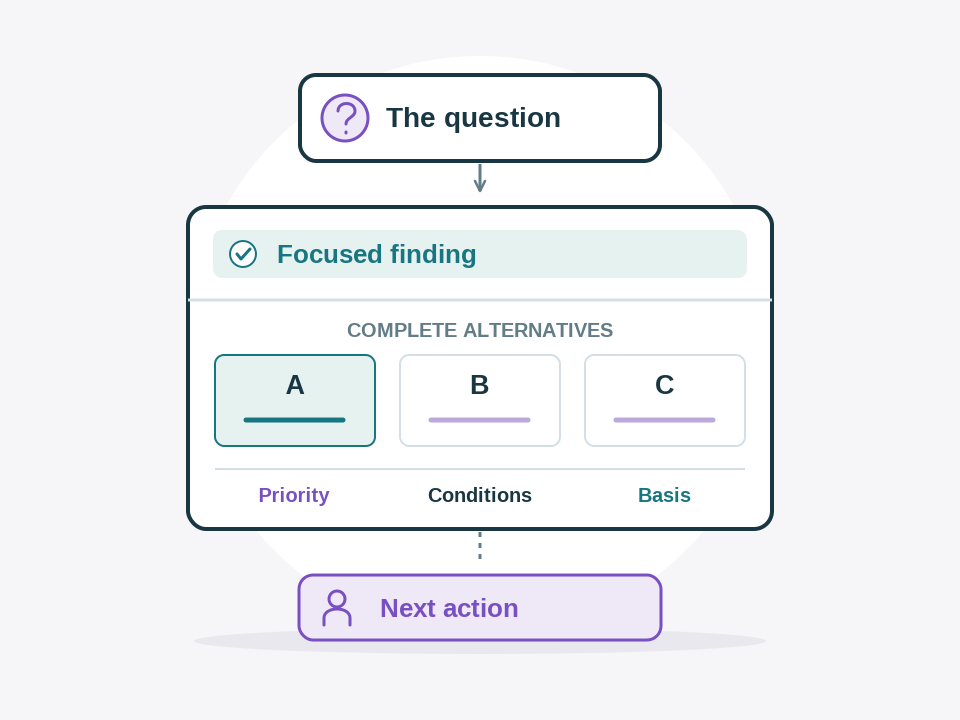
Before acting on a recommendation, identify what it establishes, what supports it and what remains unresolved. Follow the reasoning through operational decisions.
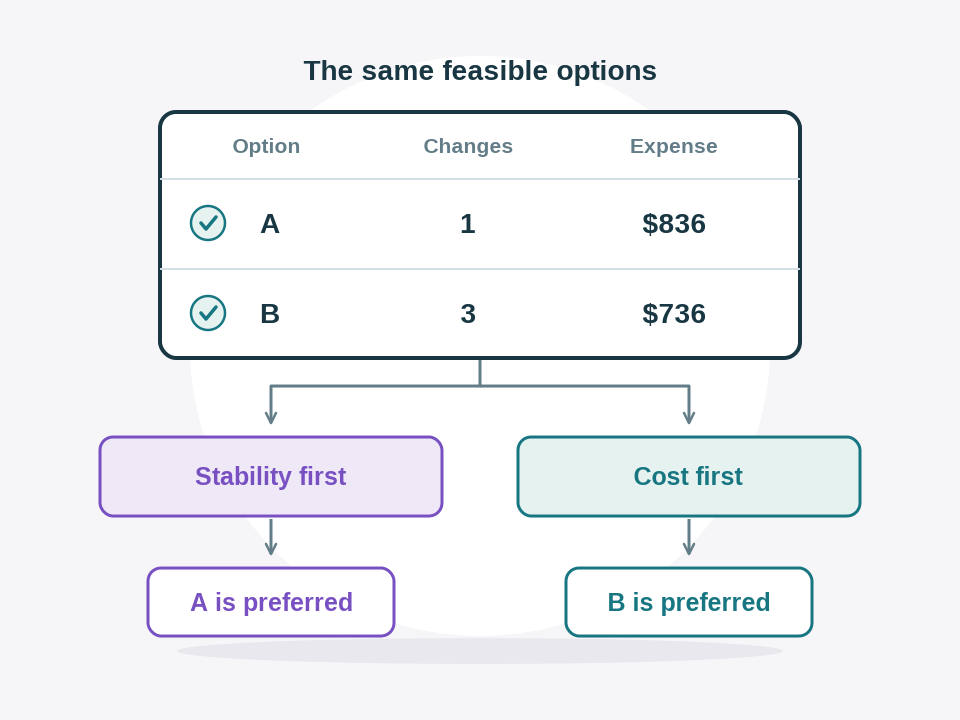
Two plans can meet every requirement and still favor different interests. Learn what a report must establish before it can call one preferred.